When I first heard the term IoT, I thought it was something complicated that only technology experts could understand. But after learning about it, I realized that the basic idea is actually very simple. IoT stands for Internet of Things. It is a technology that allows everyday physical devices to connect to the internet, collect information, share data, and sometimes make decisions automatically.
Today, IoT is becoming a normal part of our daily lives. From smart watches and smart televisions to security cameras, smart home appliances, cars, and industrial machines, many devices are connected to the internet. In my opinion, IoT is one of the technologies that is quietly changing the way we live and work.
In this article, I will explain what IoT means, how it works, where we use it, its benefits, its challenges, and what the future of IoT may look like.
What Is IoT?
IoT means Internet of Things. The word things refers to physical objects that can connect to the internet and communicate with other devices or systems.
A normal device simply performs a specific task. For example, a traditional light bulb only produces light when we turn it on. A smart light bulb can connect to the internet. We can control it using a smartphone, set a schedule, or connect it with other smart devices.
This is the basic idea behind IoT.
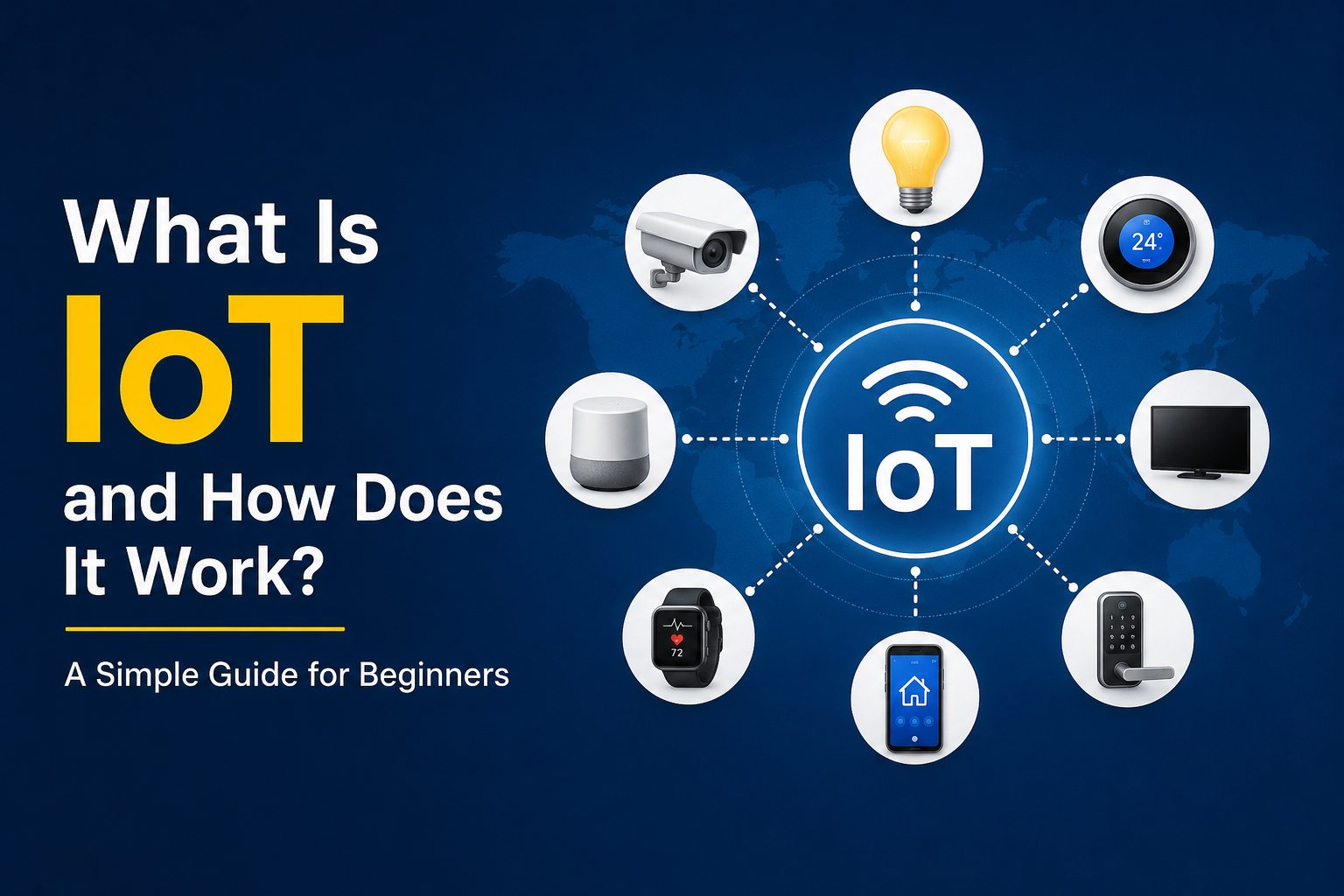
An IoT device usually has sensors, software, a connection to a network, and some way to process or send information. These features allow the device to collect information from the environment and communicate that information to another system.
For example, a smart thermostat can measure the temperature inside a room. It can send that information to an application or cloud system. Based on the settings, the system can tell the thermostat to increase or decrease the temperature.
So, IoT is not just about connecting devices to the internet. It is about making those devices smarter and allowing them to communicate and work automatically.
How Does IoT Work?
The working of IoT may sound complicated at first, but I find it easier to understand when we break it into a few simple steps.
First, an IoT device collects information. This is usually done through sensors. The sensors can measure things such as temperature, movement, light, pressure, location, humidity, or sound.
After collecting the information, the device sends it through a network. The network could be WiFi, Bluetooth, mobile networks, or another communication method.
The information then reaches a processing system. This processing may happen directly on the device, on another nearby computer, or in the cloud.
After the information is processed, the system may send instructions back to the device. The device can then perform an action.
For example, imagine a smart security camera. The camera detects movement using its sensors. It sends information through the internet. The software analyzes the information and may identify that a person is present. The system can then send an alert to the owner’s smartphone.
This entire process can happen within seconds.
Main Parts of an IoT System
An IoT system normally contains several important parts. Each part has a different role.
Sensors
Sensors are one of the most important parts of an IoT device. They allow the device to understand what is happening around it.
For example, a smart watch can use sensors to collect information about movement, location, and other measurements. A smart farming system can use sensors to monitor soil moisture.
Without sensors, many IoT devices would not have useful information to collect.
Internet or Network Connection
After collecting data, the device needs a way to communicate. This is where a network connection becomes important.
Different IoT devices can use different types of connections. WiFi is common in homes and offices. Bluetooth is useful for short range communication. Mobile networks can connect devices in locations where WiFi is not available.
The type of connection depends on what the device needs.
Data Processing
After data is collected, it needs to be processed. This is where software and computers become important.
For example, a temperature sensor may send information about the current temperature. A software system can compare that temperature with a selected setting and decide whether the heating or cooling system should be turned on.
Modern IoT systems can process huge amounts of data using cloud computing and other technologies.
User Interface
The final part is the way people interact with the IoT system.
Most modern IoT devices can be controlled through smartphone applications, websites, computers, or voice assistants.
For example, I can imagine having a smart home where I can check cameras, control lights, adjust temperature, and manage other devices from one application.
Examples of IoT in Everyday Life
IoT is already around us, even if we do not always notice it.
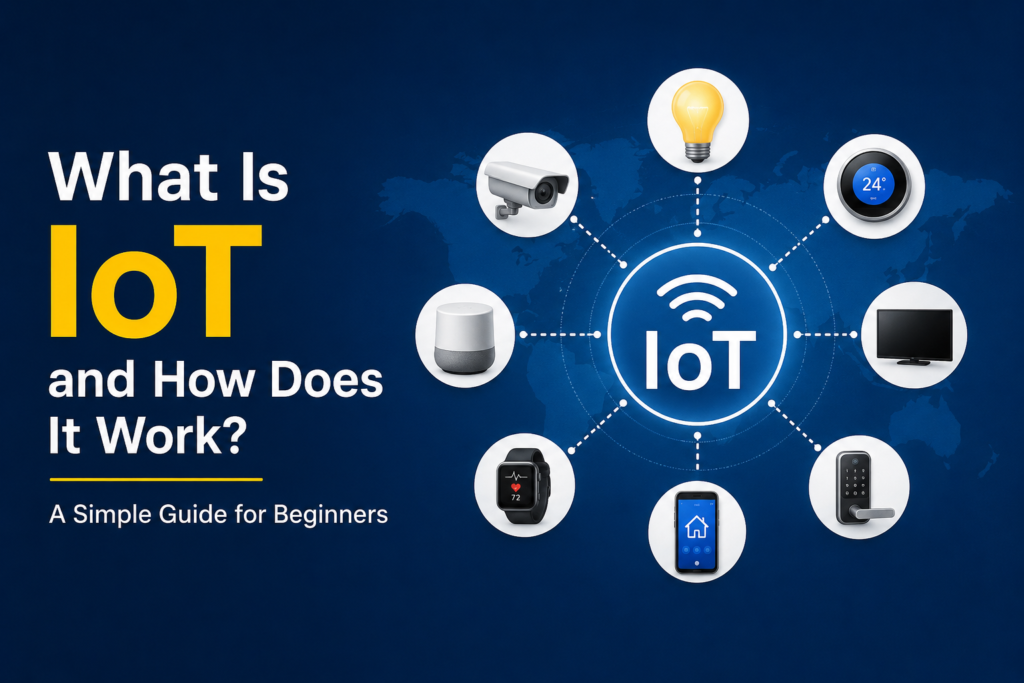
Smart home devices are one of the easiest examples. Smart lights, smart speakers, smart thermostats, smart locks, and smart cameras can all communicate through networks.
Wearable devices are another common example. Smart watches and fitness trackers can collect information and send it to mobile applications.
Smart televisions can connect to the internet and provide streaming services, applications, updates, and other online features.
Modern cars also use many connected technologies. Vehicles can collect information about their condition, location, performance, and safety. Some vehicles can communicate with mobile applications and provide useful information to the owner.
IoT is also used in agriculture. Farmers can install sensors in fields to monitor soil moisture, temperature, weather conditions, and other factors. This information can help farmers make better decisions about irrigation and crop management.
IoT in Business
In my opinion, IoT has an even bigger impact on businesses than many people realize.
Companies can use connected devices to monitor machines, track equipment, manage inventory, and improve operations.
For example, a factory can place sensors on machines. These sensors can continuously monitor machine performance. If a machine starts showing unusual behavior, the system may identify a possible problem before the machine completely stops working.
This can help businesses reduce unexpected downtime and maintenance costs.
Stores can also use IoT technology for inventory management. Connected systems can provide information about products and stock levels. This can make it easier for businesses to understand what they have and what they need.
Benefits of IoT
There are many reasons why IoT is becoming popular.
One major benefit is convenience. Smart devices can perform tasks automatically, which can save time.
Another benefit is better decision making. IoT devices can collect large amounts of real time information. Businesses and individuals can use this information to make more informed decisions.
IoT can also improve efficiency. Machines and systems can be monitored continuously, helping organizations identify problems and reduce waste.
Another important benefit is automation. Instead of manually performing every task, connected devices can respond automatically to specific situations.
For example, a smart irrigation system can provide water when soil moisture becomes too low.
IoT can also help improve safety. Connected cameras, sensors, alarms, and monitoring systems can provide warnings when unusual activity is detected.
Problems and Challenges of IoT
Although IoT has many benefits, it also has some challenges. I believe it is important to understand these problems before using connected devices.
Security is one of the biggest concerns. Every device connected to the internet can potentially become a target for attackers if it is not properly protected.
Privacy is another important issue. IoT devices can collect a lot of information. Depending on the device, this information could include location, habits, activities, or other personal data.
Another challenge is the large amount of data generated by IoT devices. Companies need reliable systems to store, process, and protect this information.
Compatibility can also be a problem. Different manufacturers may use different technologies and systems. Sometimes devices from different companies may not work together smoothly.
Finally, IoT devices need regular updates and maintenance. An old device with outdated software can become a security risk.
Is IoT Safe?
IoT can be safe when it is designed, configured, and maintained properly. However, users should not assume that every connected device is automatically secure.
I personally think users should take simple security steps. Strong passwords should be used for accounts and devices. Default passwords should be changed. Software and firmware should be updated regularly.
It is also a good idea to avoid buying unknown devices from unreliable sources, especially when those devices collect sensitive information.
Users should also understand what information a device collects and how that information is stored or shared.
Future of IoT
I believe IoT will become even more common in the future. As internet connections become faster and devices become more affordable, more everyday objects will become connected.
Smart homes may become more intelligent and automated. Cities could use connected systems to manage traffic, lighting, waste collection, parking, and public services.
Healthcare can also benefit from IoT. Connected medical devices may help professionals monitor patients and collect information more efficiently.
Agriculture, transportation, manufacturing, and energy management are also expected to continue using connected technologies.
Artificial intelligence may make IoT even more powerful. Instead of simply collecting information, connected systems can analyze data and make more intelligent decisions.
Final Thoughts
In simple words, IoT is about connecting physical devices to the internet so they can collect information, communicate, and perform useful actions.
When I look at how IoT is developing, I think its biggest advantage is not simply making devices connected. The real advantage is the ability to make systems smarter and more responsive.
From a smart watch on our wrist to connected machines in factories, IoT is already part of modern life. We may not always notice it, but these technologies are working quietly in the background.
At the same time, I believe people should use IoT responsibly. Security, privacy, and proper maintenance are just as important as convenience.
The future of IoT looks interesting because connected devices are becoming smarter every year. As technologies such as artificial intelligence, cloud computing, and faster networks continue to develop, IoT could become an even bigger part of our homes, workplaces, cities, and everyday lives.
For beginners, the easiest way to remember IoT is this: IoT connects physical things to the internet so they can collect data, share information, and sometimes act automatically. That simple idea is already changing the world around us.