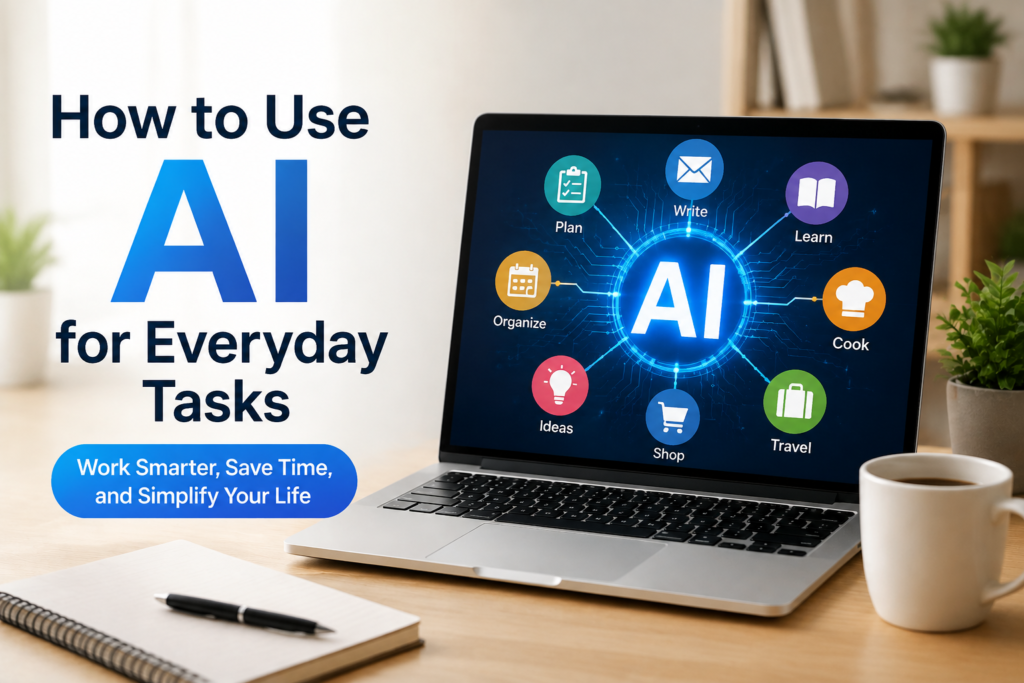
Artificial intelligence has become a part of my everyday life in ways I did not expect a few years ago. At first, I thought AI was mainly useful for programmers, businesses, and people working with advanced technology. After using different AI tools myself, I realized that AI can also make many simple daily tasks easier. From writing emails to planning my day, learning new things, organizing information, and even getting ideas for meals, I can use AI in many practical ways.
I do not think AI should replace everything we do ourselves. Instead, I see it as a helpful assistant. It can save time, reduce repetitive work, and help me think about a problem from a different perspective. The important thing is learning how to use it properly.
In this article, I will share how I use AI for everyday tasks and how anyone can start using it without needing advanced technical knowledge.
Using AI to Plan My Day
One of the easiest ways I use AI is for daily planning. Sometimes I have several things to complete and do not know where to start. Instead of trying to organize everything in my head, I can explain my tasks to an AI tool and ask it to create a simple schedule.
For example, I might have work to complete, a few personal tasks, some reading, and an appointment. I can tell AI about these responsibilities and ask it to arrange them according to priority.
I find this useful because AI can help me see my day more clearly. It can also suggest which tasks should be completed first and which ones can wait.
I still make the final decision myself, but having a basic plan makes my day feel much more organized.
Using AI for Writing Emails
Writing emails can take more time than people realize. Even a short professional email sometimes requires me to think about the right words and tone.
I can use AI to create a first draft of an email. For example, I can explain what I want to say in simple language and ask AI to turn my thoughts into a professional email.
I can also ask it to make an email more polite, friendly, clear, or professional. This is especially helpful when I am worried that my message might sound too direct.
I always read the final email before sending it. AI can help with wording, but I believe the message should still sound like me.
Using AI for Learning
AI has also changed the way I learn new subjects. When I come across something I do not understand, I can ask AI to explain it in simple words.
For example, if I am learning about technology, finance, writing, or another subject, I can ask AI to explain the topic as if I am a beginner.
What I like most is that I can ask follow up questions. If the first explanation is difficult, I can ask for an easier explanation. I can also request examples or practical situations.
This makes learning feel more like having a personal tutor available whenever I need help.
However, I do not depend completely on AI for important information. When the subject involves important decisions, I prefer to check reliable sources as well.
Using AI for Cooking Ideas
Another simple way I can use AI is for planning meals. Sometimes I have ingredients at home but no idea what to cook.
I can tell AI what ingredients I have and ask for meal suggestions. It can give me several ideas and explain how to prepare them.
AI can also help me create a weekly meal plan based on my preferences. If I want simple meals that do not require many ingredients, I can mention that in my prompt.
This is a small use of AI, but it can save time and reduce the frustration of deciding what to cook every day.
Using AI for Shopping Lists
Making a shopping list can also become easier with AI. If I am planning meals for a week, I can ask AI to create a list of ingredients that I may need.
I can also organize the list into categories such as vegetables, fruits, household items, and other groceries.
I still check the list myself because AI does not know exactly what I already have at home. However, it gives me a useful starting point.
This is especially helpful when I have a busy schedule and want to avoid forgetting important items.
Using AI to Summarize Information
I often come across long articles, documents, or large amounts of information. Reading everything can take a lot of time.
AI can help summarize information and highlight the main points. Instead of asking for a general summary, I can tell AI exactly what information I want to understand.
For example, I can ask it to identify the main ideas, important facts, or action points from a piece of text.
I find this particularly useful when I need to understand the general idea of something before deciding whether I need to read it in detail.
At the same time, I do not treat summaries as a replacement for important original documents. If the information is important, I prefer to read the original source too.
Using AI for Travel Planning
Planning a trip can involve many small decisions. I may need to think about places to visit, activities, food, transportation, and how much time I have.
AI can help me create a basic travel plan based on my destination, available time, and interests.
For example, I can explain that I have three days in a particular city and want a relaxed trip rather than a busy schedule. AI can then suggest a possible daily plan.
I would still check current opening hours, prices, travel conditions, and other important details before making final decisions. AI is useful for ideas and organization, while current information should be verified.
Using AI for Personal Organization
I also find AI helpful when I have a lot of information that needs to be organized. I can use it to turn messy notes into a cleaner structure.
For example, if I write down several ideas randomly, AI can organize them into categories. It can also turn notes into a checklist or a simple plan.
This is useful for personal projects, work tasks, study plans, and many other situations.
The main benefit for me is that I do not have to spend as much time organizing information manually.
Using AI for Brainstorming
Sometimes the hardest part of starting something is finding the first idea. AI can be useful as a brainstorming partner.
If I want to write an article, start a project, create a social media post, or solve a problem, I can ask AI for several ideas.
I do not simply copy the suggestions. Instead, I use them to get my own thinking started.
For me, this is one of the best uses of AI because it can help me look at a topic from different angles. Even when I do not like the suggestions, they can lead me toward a better idea.
Using AI to Improve My Writing
AI can also help me improve my writing without completely writing everything for me.
I can write something in my own words and ask AI to correct grammar, improve clarity, or make the structure easier to understand.
This is useful when I want my writing to sound more professional while still keeping my original meaning.
I believe this is a better approach than blindly asking AI to write everything. When I write the main ideas myself, the final result feels more personal and authentic.
Using AI for Everyday Problem Solving
There are many small problems that come up during the day. Sometimes I know what I want to achieve but do not know the easiest way to do it.
AI can help me think through these situations. I can explain the problem and ask for possible solutions.
For example, I might need help organizing files, understanding a computer setting, preparing a checklist, or creating a simple plan.
AI does not always give the perfect answer, but it can provide a useful starting point. I can then decide which suggestion makes the most sense for my situation.
How I Get Better Results From AI
One thing I have learned is that the quality of my question affects the quality of the answer. If I give AI very little information, the response may be too general.
Instead, I try to explain what I actually need. I mention my goal, the situation, and any important limitations.
For example, instead of saying “Make me a schedule,” I can say that I have five tasks, two hours available, and one task is more important than the others.
The more useful context I provide, the more useful the response usually becomes.
I also ask AI to change its answer when the first response is not suitable. I can ask for simpler language, more examples, fewer details, or a different structure.
Things I Keep in Mind When Using AI
Although AI is extremely useful, I do not believe it should be trusted blindly. AI can sometimes provide incorrect information or misunderstand a question.
For important topics, I check information from reliable sources. I also avoid sharing private information, passwords, financial details, or other sensitive data with AI tools.
Another important point is that AI should support my decisions rather than make every decision for me. I use it as a tool, not as a replacement for my own judgment.
Final Thoughts
For me, the biggest advantage of AI is not that it can do complicated things. Its real value is that it can make ordinary tasks easier.
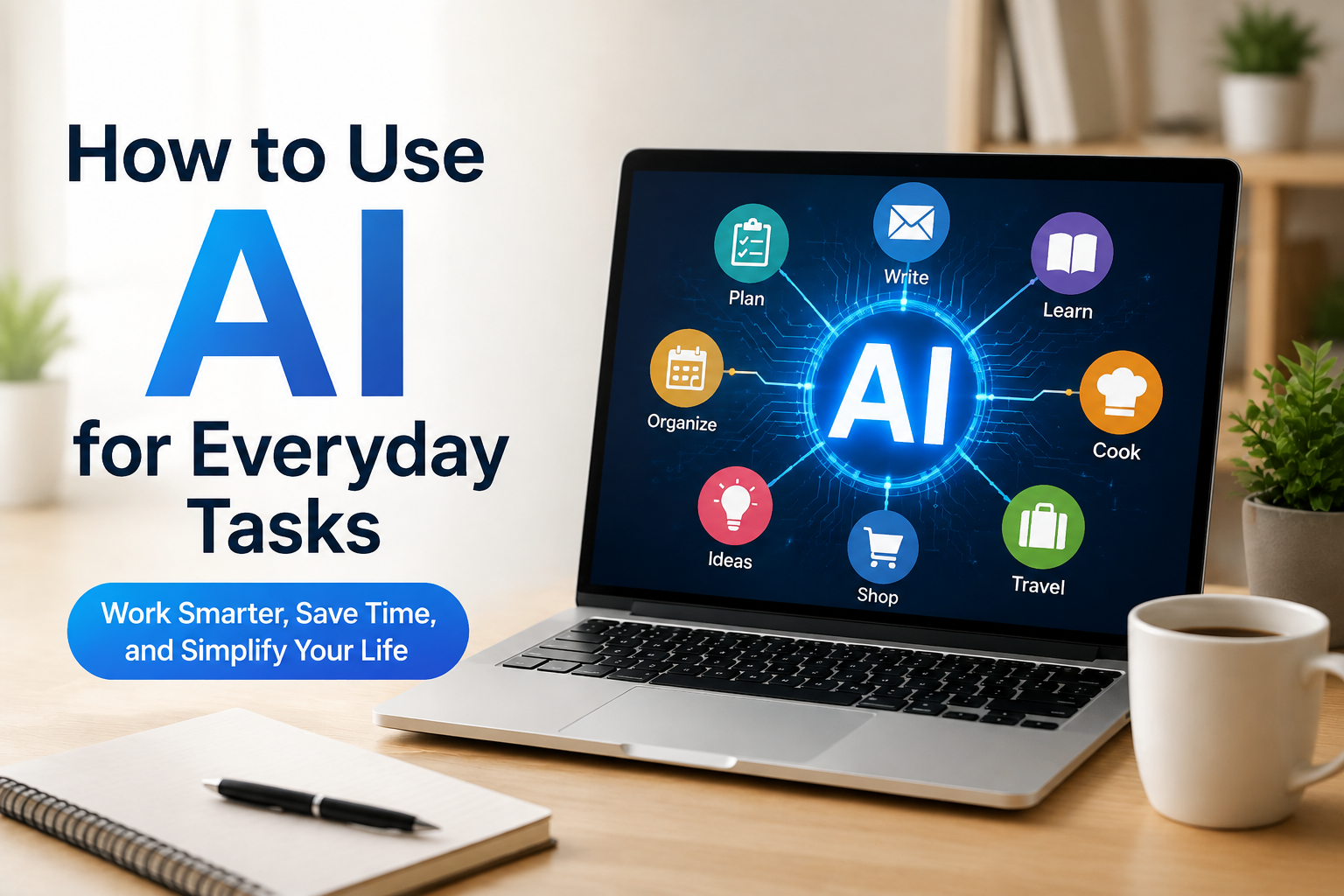
I can use AI to plan my day, write emails, learn new subjects, organize information, find meal ideas, plan trips, improve writing, and solve everyday problems. These small improvements can save a surprising amount of time.
I believe the best way to use AI is to start with simple tasks. There is no need to learn complicated technology before getting value from it. Just choose something you regularly find difficult or time consuming and see whether AI can help.
The more I use AI, the more I understand where it is useful and where I still need to rely on my own judgment. For me, that balance is the most practical way to use artificial intelligence in everyday life.